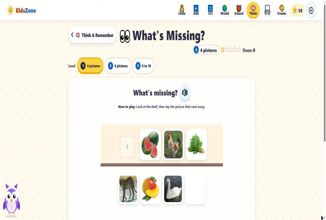
What's Missing? A shelf, a few pictures, and one that quietly disappears
You may remember a party game from childhood: someone puts a few objects on a tray, you look for a minute, they cover it, take one away, and you have to...
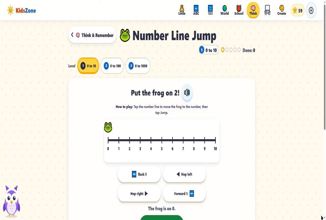
Put the frog on 2: Number Line Jump and seeing numbers as distances
Children usually meet numbers as things to count: three apples, five pencils. The number line shows them something different: numbers have a place, and the...
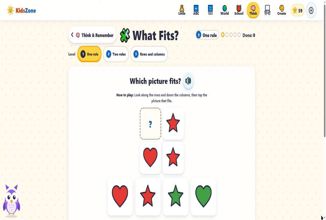
What Fits? Reading a grid in two directions at once
If you've ever seen a reasoning test or a school olympiad paper, you'll recognise this kind of puzzle: a small grid of pictures with one square missing...
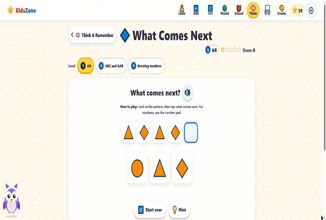
Triangle, diamond, triangle, diamond... What Comes Next and the habit of spotting patterns
Patterns are the quiet backbone of maths. Times tables are patterns. Odd and even numbers are a pattern.
My Quiz: when the parent writes the questions
Every learning app has the same limit: someone else decides the questions. But the person who knows exactly what your child is studying this week, which...
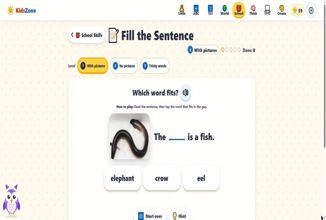
The ___ is a fish: Fill the Sentence and reading for meaning
There's a big difference between reading words and understanding a sentence. A child can sound out every word in "The eel is a fish" and still not really...
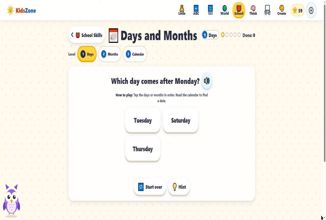
Which day comes after Monday? Days, months and reading a real calendar
Time is hard for young children. Not just clocks, but the bigger shape of time: days, weeks, months, a year.
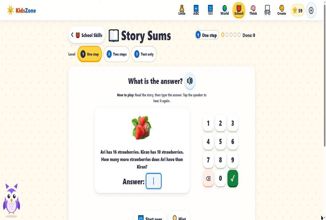
Ari has 16 strawberries: Story Sums and the art of reading a maths question
Ask any primary school teacher where children lose the most marks in maths, and many will say word problems.
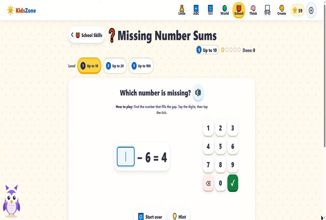
Something minus 6 equals 4: Missing Number Sums and the first taste of algebra
Most sums children see are the same shape: 6 + 4 = ?. The answer always sits at the end. But real problems don't always work that way.
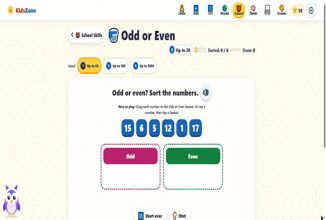
Odd or Even: sorting numbers into two baskets, all the way to 1000
Odd and even is one of those maths ideas that seems tiny but turns up everywhere: in times tables, in sharing things equally, in house numbers on a street...
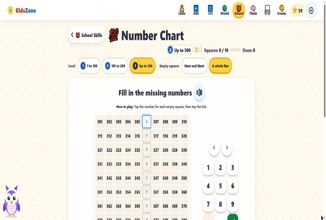
Fill in the missing numbers: the Number Chart from 1 to 500
The hundred chart, a 10 by 10 grid of numbers, is one of the most useful tools in early maths.
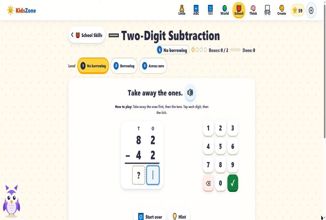
Borrowing without tears: Two-Digit Subtraction, one column at a time
If carrying in addition feels like magic to children, borrowing in subtraction feels like a trick played on them.
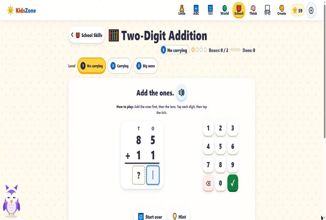
Add the ones first: Two-Digit Addition the way schools teach it
Many children are confident with sums up to 20 and then hit a wall at two-digit numbers. The numbers look big, carrying feels like a magic trick, and...
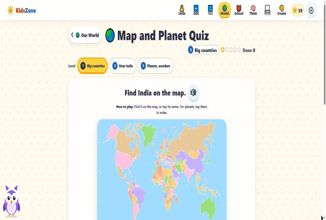
Find India on the map: the Map and Planet Quiz for young geographers
Learning names from picture pages is one thing. Finding a country on a blank-looking map, without labels, is a real test.
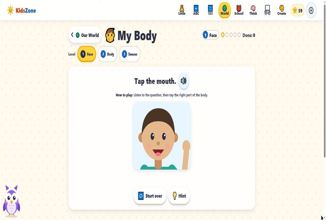
Tap the mouth: My Body for little learners, from face to five senses
"Where's your nose?" might be the first game many of us played with our babies. Body parts are among the first words children learn, and among the first...
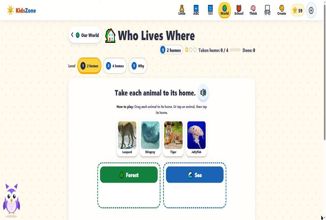
Who Lives Where: taking each animal home, and then asking why
"Where does a tiger live?" A child might say "in the zoo" or "in the jungle". Both are reasonable answers, and both are a starting point for one of the most...
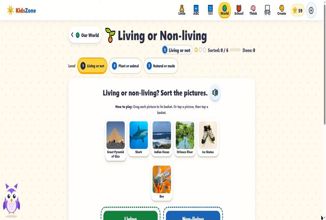
Is a river alive? Living or Non-living and the questions children love to argue about
"Living and non-living things" is one of the first chapters in almost every EVS textbook. It sounds simple.
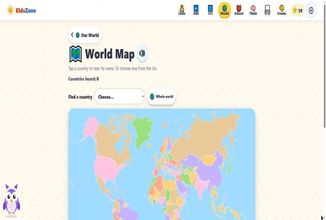
Tap a country, hear its name: the World Map for small explorers
A world map can look like a jigsaw with too many pieces. Children see a mass of colours and shapes and don't know where to begin.
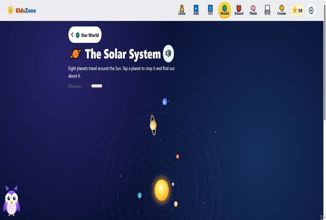
Tap a planet to stop it: the Solar System page that moves
Most picture pages on KidsZone are grids of photographs. The Solar System page is different.
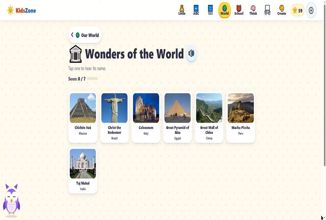
Seven wonders, one of them in Agra: a small page for big conversations
Every child in India knows the Taj Mahal. Fewer know that it's one of a handful of buildings that people around the world call wonders.
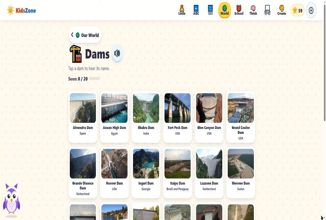
Bhakra, Tehri, Hoover, Three Gorges: 20 dams and why we build them
Children are natural engineers. Give a five-year-old some sand and a trickle of water and they'll build a dam within minutes, watching the water pool behind it.
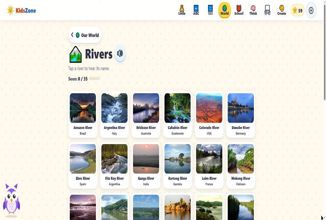
From the Ganga to the Nile: 35 rivers and the countries they flow through
Rivers are where geography becomes a story. Cities grew beside them. Festivals happen on their banks. Farmers depend on them.
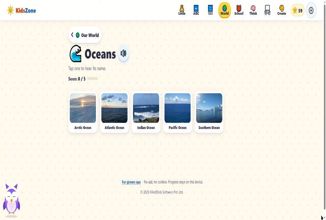
Five oceans, one planet: the shortest page on KidsZone and one of the biggest ideas
The Oceans page in Our World has just five pictures. It's one of the smallest pages on KidsZone.
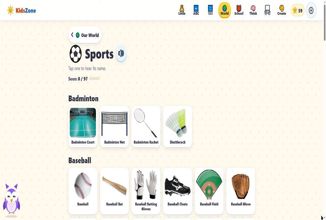
What's a shuttlecock called? 97 sports words, grouped by game
Children pick up sports words from television, playgrounds and older cousins, often slightly wrong. "Batting gloves" become "cricket socks".