AI Won’t Take Your Job but Someone Using AI Might
I have spent more than twenty years writing code, managing developers and running a software company. I have seen technology change work many times: the internet, smartphones, cloud computing. But nothing has moved as quickly as AI over the last few years.
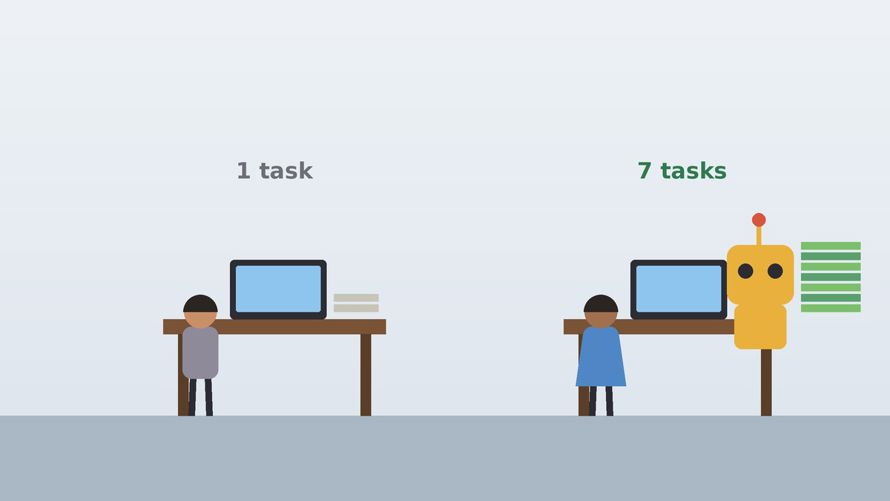
In my own office, I have watched one developer finish in a day what used to take three. I have seen content writers draft, check and edit far faster. Support teams answer more queries with fewer delays. And I have also seen people who refuse to touch these tools fall behind, slowly but clearly.
That experience convinced me of one simple idea: AI is not the main threat to most people’s jobs. A colleague who uses AI well is.
What AI Actually Does Well
Today’s AI tools are very good at:
- Writing first drafts of emails, reports, articles and code.
- Summarising long documents, meetings and research.
- Answering routine questions for customers.
- Analysing data and spotting patterns.
- Translating between languages, including many Indian languages.
These are tasks, not entire jobs. Most jobs are bundles of many tasks. AI takes over some, speeds up others and leaves many untouched.
What AI Still Struggles With
- Judgement in messy, real-world situations.
- Responsibility: someone still has to sign off and be accountable.
- Relationships: clients, patients and teams want to deal with people they trust.
- Physical work: plumbers, electricians, nurses and drivers are far harder to replace than many office tasks.
- Knowing what matters: AI can produce a hundred ideas; humans still have to choose the right one.
Where Jobs Are Most Exposed
I won’t pretend the risk is zero. Roles built mostly on repetitive digital tasks are under real pressure: basic data entry, simple content writing, some call centre work, junior coding and routine back-office jobs. India has millions of people in these areas, especially in IT services and BPOs.
Companies may not fire people in large numbers overnight. But they may hire fewer freshers, expect more output per person and reward those who can work faster with AI. That is how change usually happens: quietly, through hiring decisions.
Why the AI User Wins
Imagine two accountants. One spends hours checking spreadsheets manually. The other uses AI to flag errors and draft reports, then spends her time advising clients. Who gets the promotion? Who keeps her job if the firm downsizes?
The same story repeats for teachers preparing lessons, lawyers reviewing contracts, designers creating concepts, marketers writing campaigns and doctors handling paperwork.
What I Tell My Team, and My Readers
- Start using AI tools daily, even for small tasks. Familiarity matters more than perfection.
- Learn to check AI output. It makes confident mistakes. Being the person who catches them is valuable.
- Strengthen human skills: communication, problem-solving and domain knowledge become more important, not less.
- Keep learning. The tools change every few months. Curiosity is now a career skill.
- Students should learn the basics of their field deeply, then use AI to go faster, not to skip learning.
The Other View
Some experts warn that this time really is different, that AI could eventually do most cognitive work, and that telling people to “learn AI” is not enough if entire categories of jobs disappear. Others say fears are overblown, just as they were with computers and ATMs, which ended up creating more jobs than they destroyed. I think the truth lies between. Some jobs will go, many will change and new ones will appear. The best protection I know is simple: don’t be the person who waited too long to learn.

Hi, I am Tarun. I work as a Computer Engineer at Cyient and my work is mostly about computer systems, servers and application support. Before this I spent 3 years at Sify Technologies. I studied B.Sc in Computer Science from Osmania University, Hyderabad. Weekends are for cooking.