Seed, sprout, flower: Story Order and the logic of first, next, last
Ask a child to tell you about their day and you'll often get it in a jumble: lunch, then the bus, then the morning assembly, then something funny that happened in between. Putting events in order is a skill, and it underlies retelling a story, writing one, following a recipe and understanding cause and effect.
Story Order in Think & Remember practises that skill with pictures.
How it works
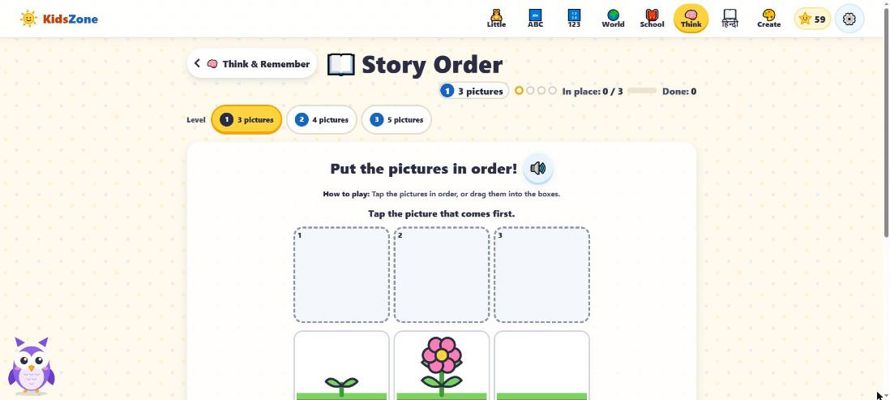
In the screenshot, three numbered boxes, 1, 2 and 3, wait at the top. Below are three pictures: a small sprout, a full pink flower and a patch of soil. The instruction says "Tap the picture that comes first." Your child taps the pictures in order, or drags them into the boxes. A counter shows how many are in place.
That example is lovely, because the right answer isn't the order the pictures appear in. Your child has to think: first the soil (where the seed is planted), then the sprout, then the flower.
Three levels
- 3 pictures
- 4 pictures
- 5 pictures
Each extra picture makes the story longer and the thinking harder. Five pictures can mean a whole small story, like getting ready for school or making a cup of tea.
Ask "how do you know?"
After your child puts pictures in order, ask why. "How do you know the sprout comes before the flower?" Their answer shows whether they're reasoning or guessing. It also builds the habit of explaining, which helps in every subject.
Sequencing words
Use the game to introduce the words: first, next, then, after that, finally. Children who use these words in speech find it easier to write a story or an answer in order later on. Encourage your child to retell the picture story using them: "First the soil, next a sprout, finally a flower."
Sequencing at home
- Cooking: making chai or a sandwich has clear steps. Ask your child to tell you the order, then follow it exactly. Funny mistakes teach a lot.
- Getting ready: draw three pictures of the morning routine and mix them up.
- Photos: print a few photos from a family trip and ask your child to put them in order.
- Plants: grow a few seeds in a pot and take a photo every few days. A real-life Story Order.
Why it matters for reading
When children understand that stories have a beginning, middle and end, they understand what they read much better. They can answer "What happened after...?" questions and spot when something is out of place.
If your child enjoys ordering things, First, Second, Third in Numbers & Sums uses the same idea with positions in a row, and Story Maker lets them build their own beginning, middle and end.

MindStick Software Pvt. Ltd. is a Microsoft Gold Partner in software application development. Our expertise is in software product design, custom programming, database design, web design and programming and cutting edge mobile applications development.