Why Homelessness Keeps Rising in the Richest Country on Earth
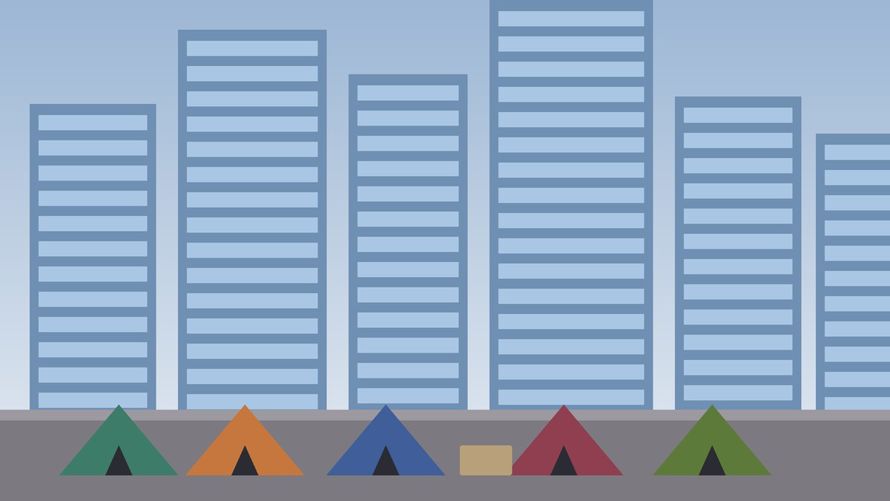
The first time I saw a row of tents on a pavement in a wealthy American city, I honestly did not know how to read it. Behind the tents were offices with glass fronts, coffee shops selling five-dollar lattes and electric cars waiting at a signal. In front of them were people sleeping on cardboard.
For someone who grew up in India, poverty on the street is not new. What shocked me was the contrast. This was the richest country on earth, in some of its richest cities.
The Numbers Are Getting Worse
The US Department of Housing and Urban Development counts homeless people on one night every January. The January 2024 count found more than 770,000 people without a home, the highest since this kind of national count began, and a jump of about 18 percent from the year before. Part of that rise came from migrants and from disasters, but even setting those aside, the trend was up.
Many of these people are not visible. They live in cars, shelters, motels or on a friend’s couch. The tents are only the part we see.
The Real Reason Is Housing
American debates about homelessness often jump straight to drugs and mental illness. Those problems are real, and anyone who has walked through parts of San Francisco or Los Angeles can see them. But I find a different argument more convincing.
Addiction and mental illness exist in every US state. Yet homelessness is far higher in some places, such as California, New York, Oregon, Washington and Hawaii, than in others. What do those places share? Very high rents and too few homes.
When a one-bedroom apartment costs more than half of a low-wage worker’s income, it takes only one bad month, a lost job, a medical bill or a breakup to fall out of housing. Once out, it is extremely hard to get back in. Then the street makes every other problem worse.
Why America Builds Too Little
- Zoning rules in many cities allow only single-family houses on most land, which blocks apartments.
- Long approval processes and local objections can delay projects for years.
- Construction costs and labour shortages push prices higher still.
- Low-cost options like rooming houses and single-room hotels, once common, have largely disappeared.
Two Camps That Keep Fighting
On one side is Housing First, the idea that you give people a stable place to live and then work on addiction, health and jobs. Many studies show it helps people stay housed. On the other side are those who say it has been tried for years with huge budgets and the streets still look the same, so cities need more enforcement and treatment requirements.
The Supreme Court’s 2024 Grants Pass decision let cities punish camping in public places, and the federal government’s approach since 2025 has leaned harder toward enforcement and treatment. I understand the frustration behind it. Residents and shop owners have a right to safe streets. But moving people from one block to another does not create a single new home.
What I Think Would Help
- Build much more housing of every kind, especially cheap rentals near jobs.
- Fund mental health and addiction treatment properly, with beds available when someone is ready.
- Prevent eviction early with emergency rent help, which is cheaper than rescuing someone later.
- Measure results honestly, so money goes to programmes that actually get people housed.
The Other View
Critics argue that calling this only a housing problem ignores how much addiction, especially fentanyl, has changed life on American streets, and that some people refuse shelter. Others say cities like San Francisco and Los Angeles spent billions with poor accountability. These are fair points, and money alone has clearly not been enough. But I keep coming back to one fact: in a country where homes are too expensive and too scarce, the people at the bottom will always be the first to fall out.

Hi, I am Tarun. I work as a Computer Engineer at Cyient and my work is mostly about computer systems, servers and application support. Before this I spent 3 years at Sify Technologies. I studied B.Sc in Computer Science from Osmania University, Hyderabad. Weekends are for cooking.