Why Varanasi Stays With You Long After You Leave
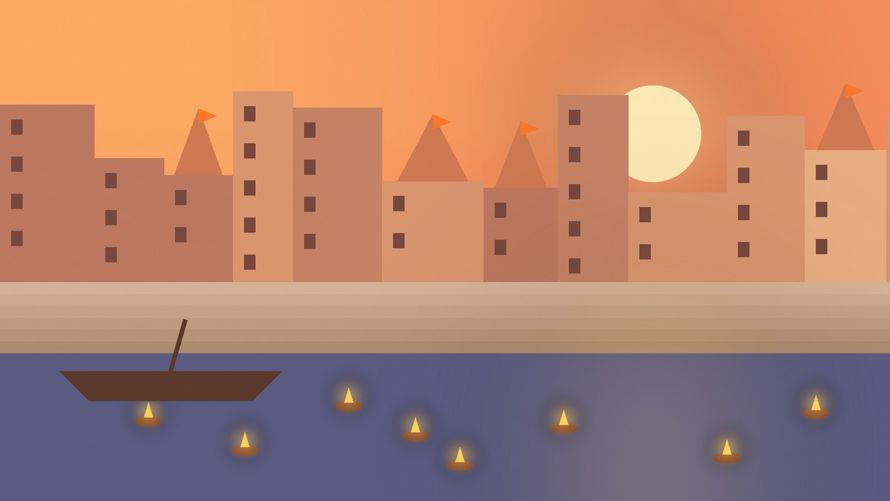
There are cities you visit and cities that visit you afterwards. Varanasi belongs to the second kind. You might leave it tired, dusty and a little overwhelmed, but weeks later, in the middle of an ordinary day, you will suddenly remember the sound of temple bells at dawn or the glow of lamps floating on the Ganga.
I have thought a lot about why this city stays with people, and I do not think it is only about religion.
A City That Does Not Perform for You
Most famous tourist places are polished for visitors. Varanasi is not. Life here happens in the open, and nobody pauses it for you. On the ghats, a priest performs rituals, a wrestler exercises, children play cricket, a boatman argues about the fare, and a family mourns a loved one, all within a few steps of each other.
At first, this is confusing. Then it becomes honest. You realise you are not watching a show. You are seeing a city that has lived this way for centuries, often described as one of the oldest continuously inhabited cities in the world.
Life and Death Side by Side
The thing that affects visitors most is how openly Varanasi deals with death. At Manikarnika Ghat, cremation fires burn day and night. For many Hindus, dying in Kashi or being cremated here is believed to bring liberation from the cycle of rebirth.
For someone from a big city, where death is hidden in hospitals and electric crematoriums, this can be shocking. But many people leave with a calm feeling. Seeing death as part of daily life makes your own worries look smaller. It quietly asks you what really matters.
The Ganga at Dawn and Dusk
If you do only two things in Varanasi, take a boat ride at sunrise and watch the evening Ganga aarti at Dashashwamedh Ghat. At dawn, the light turns the old buildings gold, people bathe and pray in the river, and the city feels peaceful. In the evening, priests move large brass lamps in rhythm to chants and bells while thousands of people watch from the steps and from boats. Even non-believers often find it moving.
The Lanes, the Food and the Music
Away from the river, the narrow lanes, or galis, are a maze of temples, shops and houses. You will get lost, and that is part of the charm. Try kachori-sabzi in the morning, malaiyo in winter, and of course a Banarasi paan. Visit a silk weaving workshop to see how Banarasi sarees are made.
Varanasi is also a city of learning and music. Banaras Hindu University is one of India’s largest universities, and the city has produced great musicians, including the shehnai legend Ustad Bismillah Khan. Kabir and Tulsidas are linked to its history. Sarnath, where the Buddha gave his first sermon, is just a short drive away.
If You Have Only One Day
- Sunrise boat ride from Assi Ghat to Manikarnika.
- Morning breakfast of kachori-sabzi and jalebi in the old city.
- Kashi Vishwanath Temple and a walk through the galis.
- Afternoon at Sarnath, where the Buddha gave his first sermon.
- Evening Ganga aarti at Dashashwamedh Ghat.
The Problems Are Real
I do not want to romanticise everything. Varanasi can be dirty, noisy and crowded. The traffic can test anyone’s patience. Some touts and fake guides try to cheat visitors. Pollution in the Ganga remains a serious issue despite clean-up programmes.
The city has changed a lot in recent years. The Kashi Vishwanath Corridor has made the temple area more open and easier to reach, and many ghats are cleaner. Some people welcome these changes. Others feel that parts of the old character, including some historic lanes and buildings, have been lost. Both views come from people who love the city.
Why It Stays With You
In the end, I think Varanasi stays with people because it makes them face questions they usually avoid. What is a good life? What happens when it ends? What do we hold on to? Few places in the world ask these questions so directly, and fewer still answer them with such calm.
If you go, do not try to see everything. Sit on the ghats for an hour without your phone. Watch the river. Let the city show you what it wants to show you. You may find that you take a little of Varanasi home with you, and that it does not leave.

Product Manager at Motorola Solutions with 7 years of experience in B2B SaaS products and roadmap planning. Before that I was an Associate Product Manager at Intuit Mailchimp. B.S. in Computer Science, Georgia Institute of Technology; MBA, Loyola University Chicago. Based in Chicago, Illinois. In my spare time you will find me reading.