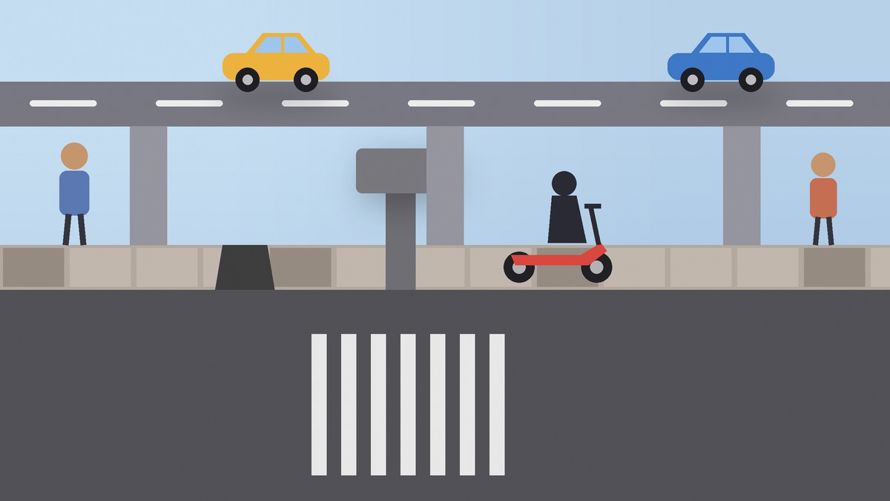
India Builds Expressways Fast but Can't Fix Its Footpaths
India today can build a six-lane expressway through hills and rivers faster than ever before. New highways connect cities that were once a full day apart. I am genuinely proud of this. Good roads drive economic growth, cut travel time and open up small towns.
But here is what bothers me. In the same cities served by these shiny expressways, you often cannot walk safely from your home to the nearest bus stop.
The Numbers We Ignore
According to the Ministry of Road Transport and Highways’ report on road accidents in 2024, India recorded about 1.77 lakh road deaths that year, roughly 485 every day. Pedestrians made up 20.6 percent of those deaths. That means every fifth person killed on Indian roads was simply walking.
These are not only people jaywalking on highways. Many are children walking to school, elderly people crossing near their homes, workers walking to bus stops and women walking back from markets in the evening.
What Walking Looks Like in Most Cities
- Footpaths that do not exist. On many roads, there is simply no space for pedestrians.
- Footpaths that are blocked. Shops spill onto them, vendors set up stalls, cars and two-wheelers park on them, and electric transformers or poles sit right in the middle.
- Footpaths that are unusable. Broken tiles, uncovered drains, kerbs as high as a knee and sudden drops make walking risky, especially for the elderly and people with disabilities.
- Two-wheelers riding on them. In heavy traffic, bikes climb onto footpaths and push pedestrians aside.
- Crossings that do not work. Zebra crossings fade, signals ignore pedestrians, and foot overbridges are often too high, dirty or poorly placed, so people risk crossing the road instead.
Why This Happens
I think the main reason is a mindset problem in planning. Roads in India are measured by how many vehicles they can carry and how fast. Success means wider lanes and smoother traffic. Pedestrians are treated as an obstacle rather than the users that roads are supposed to serve.
There is also a funding gap. Highways come with large budgets, central schemes and visible inauguration ceremonies. Footpaths are a municipal job, done by underfunded city bodies, often through low-quality contracts. Nobody cuts a ribbon for a well-built footpath.
Finally, enforcement is weak. Encroachment on footpaths is illegal in most places, but clearing it is politically difficult because it affects vendors and shopkeepers. So the problem is tolerated.
Why It Matters So Much
Most Indians still walk for at least part of their daily journey, even if they also use buses, metros or autos. Good footpaths make public transport work, because people need to reach stations safely. They reduce traffic, because short trips can be walked. They help local shops, improve health and make cities more pleasant.
A country that wants world-class cities cannot ignore its pedestrians.
What I Would Like to See
- Continuous, level footpaths at least two metres wide on all main city roads, following national design guidelines.
- Strict action on parking and encroachment, with organised vending zones so street vendors are not simply evicted.
- At-grade pedestrian crossings with signals, instead of relying only on foot overbridges.
- Lower speed limits in markets, school zones and residential areas.
- Walkability audits for every new highway, metro station and flyover project.
- A fixed share of city road budgets reserved for pedestrian and cycling infrastructure.
The Other View
Some argue that India needs to prioritise highways first because economic growth depends on moving goods quickly, and that footpaths are a local matter. Others point out that many cities have improved, with redesigned streets in parts of Pune, Chennai and Delhi showing what is possible.
Both points are fair. But the two goals are not in conflict. We can build fast expressways and safe footpaths at the same time. It is a question of priorities, and right now the person walking is at the bottom of the list. Until that changes, our impressive roads will tell only half the story of development.

Hi, I am Benjamin, currently studying Commerce at McGill University. I am originally from Ottawa, Ontario. My interests are finance, case competitions and entrepreneurship. In my free time I enjoy running and cycling.