Is Social Media Making Us Lonelier?
On a recent train journey, I counted. In my coach, almost everyone was looking at a phone. A couple sat side by side, each scrolling separately. A family of four shared a meal while watching four different screens. When the train stopped, nobody looked up.
I am not innocent here. I check my phone too often too. But that scene made me ask a question I have been thinking about for a long time: are we more connected than ever, or lonelier than ever?
The Loneliness Problem Is Real
Loneliness is no longer just a personal feeling. In 2023, the US Surgeon General called it a public health concern, comparing its health effects to other serious risks. Countries like the UK and Japan have appointed ministers to tackle it. In India, we used to believe joint families and busy neighbourhoods protected us. But in cities, many young professionals, students and elderly people living alone tell a different story.
How Social Media Can Make It Worse
- Comparison: We see everyone else’s holidays, weddings, promotions and perfect dinners. We compare our ordinary life to their best moments. It is hard not to feel left behind.
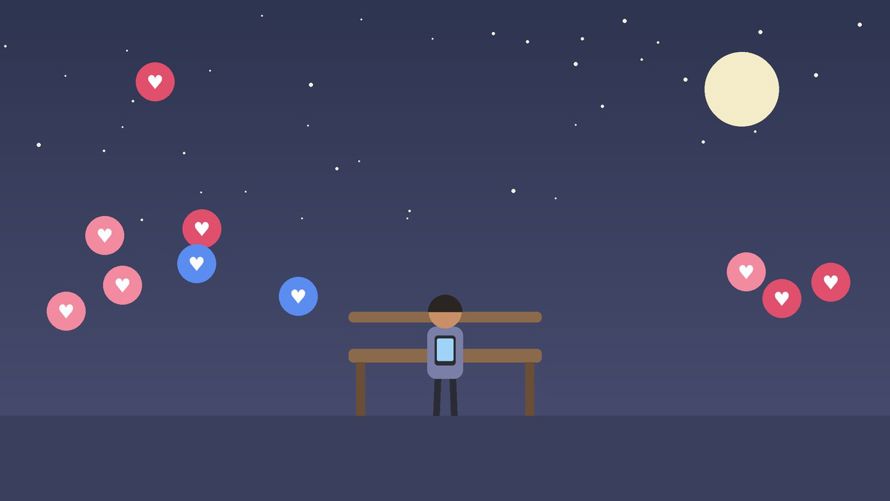
- Shallow contact: A like or a heart emoji feels like connection but doesn’t require much. Over time, these small signals replace calls and visits.
- Time stolen from real life: Hours spent scrolling are hours not spent with friends, family, hobbies or sleep.
- Fear of missing out: Seeing friends at an event you weren’t invited to stings far more when it appears on your screen.
- Designed to keep us hooked: Infinite scroll, autoplay and notifications are built to hold attention, not to make us feel better.
Teenagers Feel It Most
Researchers like Jonathan Haidt argue that the rise of smartphones and social media around the early 2010s coincided with a sharp increase in anxiety and depression among teenagers, especially girls. Not every expert agrees on how strong the link is, but the concern has become serious enough that Australia restricted social media for under-16s and many schools are banning phones in classrooms.
But It Also Connects People
I don’t want to sound like someone who blames technology for everything. Social media has real benefits:
- My relatives in different cities and countries share updates in family WhatsApp groups that keep us close.
- People with rare illnesses, niche hobbies or minority identities find communities they could never find locally.
- During COVID lockdowns, video calls and social apps were a lifeline.
- Old friends reconnect after decades.
The difference, I think, is whether social media adds to real relationships or replaces them.
How I Try to Use It Better
- Use it to plan meetings, not to replace them. A message saying “Let’s have tea this Sunday” is worth more than a hundred likes.
- Call instead of commenting. A two-minute call to someone you care about creates more warmth than a long comment.
- Unfollow accounts that make you feel worse. Your feed should not be a daily reminder of what you don’t have.
- Keep phone-free times, especially during meals and the first hour of the morning.
- Notice how you feel after scrolling. If you feel worse, that is information worth listening to.
The Other View
Some researchers argue that the evidence linking social media to loneliness is mixed, and that loneliness is driven more by bigger changes like urban living, smaller families, long working hours and fewer community spaces. Others point out that for introverted or isolated people, online connection can be a genuine help. I find these points convincing too. Social media is a tool, and like any tool, it can build or damage. But for many of us, myself included, I suspect it has quietly taken time and attention away from the people who matter most.

Chief Physician, Orthopaedics at Helsinki University Hospital. I graduated from the University of Helsinki with a Licentiate of Medicine degree and completed a specialist degree in Orthopaedics and Traumatology at the same university. I have 9 years of experience in this post, focused on joint replacement, sports injuries and fracture care. Outside work I enjoy running and photography.