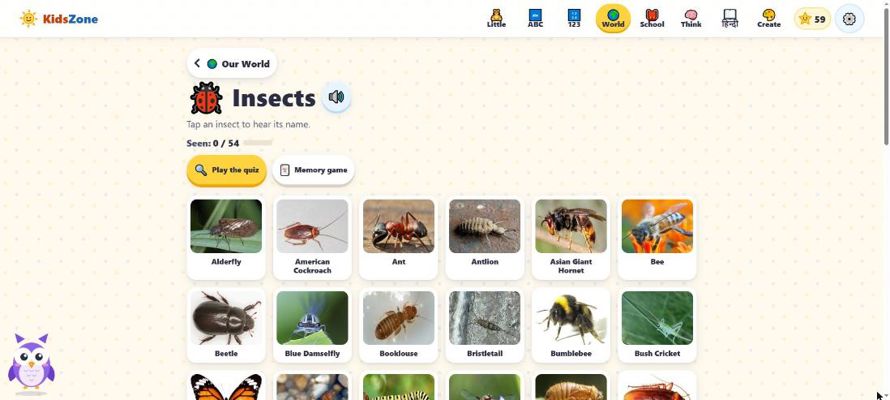
54 insects, including the cockroach nobody wants to tap
Children have strong feelings about insects. Butterflies are beautiful. Bees are scary. Cockroaches are disgusting. Ladybirds are cute. Those feelings are a good starting point, because a child who has an opinion about something is already paying attention to it.
The Insects page in Our World has 54 insects, each with a clear photograph and a name read aloud on a tap.
What's on the page
The screenshot shows the first rows: alderfly, American cockroach, ant, antlion, Asian giant hornet, bee, beetle, blue damselfly, booklouse, bristletail, bumblebee and bush cricket. Scroll down and there are dozens more, including a butterfly and a caterpillar.
The Seen counter tracks progress through all 54. Play the quiz and Memory game turn the page into games when your child is ready.
Up close is less scary
Something interesting happens when children see insects in a large, clear photo. The fear often turns into curiosity. A bumblebee up close is fuzzy and round. An ant has a surprisingly neat body. Even the cockroach, seen still and calm on a white background, becomes something to look at rather than run from.
If your child is nervous about bees or wasps, this page is a gentle way to talk about them. Which ones sting? What do bees do for flowers? Why should we leave them alone?
What makes an insect an insect?
Here's a simple rule your child can check on the photos: an insect has six legs and a body in three parts. Ask your child to count the legs on a few insects. Then ask about a spider (eight legs). Not an insect! That one fact gives children a tool they can use for the rest of their lives.
Insect detectives at home
- Take a magnifying glass (or a phone camera with zoom) into the garden or balcony and look for ants.
- Watch where they go and what they carry.
- Find a ladybird or a butterfly and look it up on the page afterwards.
Ten minutes of watching ants teaches more about teamwork and patience than many lectures.
Good insects and pests
EVS lessons often talk about helpful and harmful insects. Use the page to sort them together:
- Helpful: bees (pollination), ladybirds (eat pests), butterflies
- Pests: mosquitoes, cockroaches, some beetles on crops
Ask your child why the same insect might be helpful in a forest but a nuisance in a kitchen. It's a real question, and there's no single right answer.
Then sort them yourself
After browsing, Living or Non-living asks children to sort the world into groups, and insects are a good warm-up for that kind of thinking.

MindStick Software Pvt. Ltd. is a Microsoft Gold Partner in software application development. Our expertise is in software product design, custom programming, database design, web design and programming and cutting edge mobile applications development.