Pelé, the Boy From a Poor Brazilian Town Who Became Football’s King
India is a cricket country, but some of my friends from Bengal will happily argue that football is the real game of the people. When they talk about football legends, one name always comes up with special affection: Pelé. In 1977, he played a match in Kolkata, and people who were there still speak of it as if it happened yesterday.
Football With a Sock Ball
Edson Arantes do Nascimento was born on 23 October 1940 in Três Corações, Brazil, and grew up in Bauru, a small town in São Paulo state. His family was poor. He shined shoes to earn money and played football barefoot, often with a sock stuffed with newspaper or rags because his family couldn’t afford a real ball.
His father, a former footballer whose career ended with injury, taught him the game. Friends nicknamed him “Pelé”; he never fully knew where the name came from and reportedly disliked it at first.
Santos at Fifteen
At 15, Pelé joined Santos, one of Brazil’s top clubs. Within a year, he was scoring regularly for the senior team and soon was called up to the national side.
The 1958 World Cup at Seventeen
At the 1958 World Cup in Sweden, Pelé was just 17. He scored a hat-trick in the semi-final and two goals in the final, including a stunning one where he flicked the ball over a defender’s head and volleyed it in. When Brazil won, he cried on the field. The world had found a new star.
Three World Cups
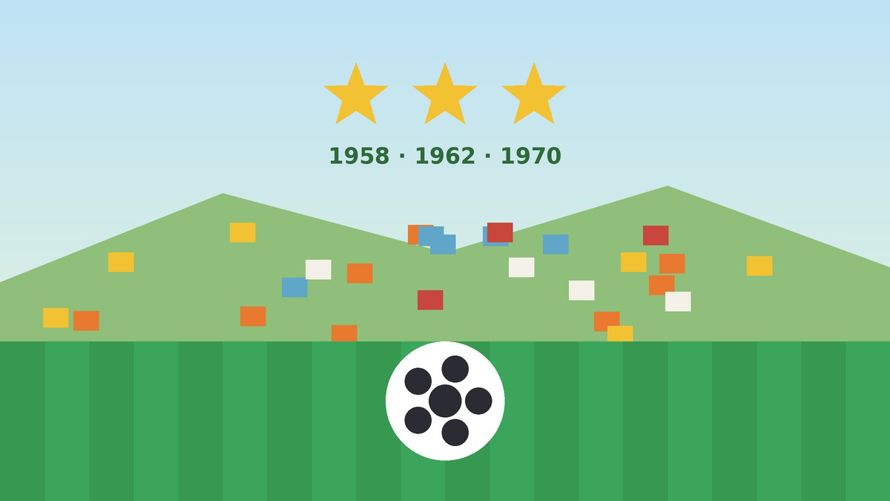
- 1958: Champion, the teenage sensation.
- 1962: Champion, though injury kept him out of most of the tournament.
- 1970: Champion in Mexico, leading what many still call the greatest team in football history.
He remains the only player to win three World Cups. He scored more than 1,000 goals in his career, counting friendlies, and well over 700 in official matches.
Bringing Football to America
In 1975, Pelé joined the New York Cosmos, hoping to make football popular in the United States. His presence filled stadiums and laid early foundations for American soccer.
The Kolkata Match
In September 1977, the Cosmos came to Kolkata to play Mohun Bagan. Eden Gardens was packed with an enormous crowd. Mohun Bagan held the Cosmos to a 2–2 draw, a result fans still celebrate. Pelé was gracious and warm toward Indian players and fans. He returned to Kolkata in 2015, and was again welcomed like royalty. For Indian football, those visits were unforgettable.
Beyond the Field
Pelé became a global ambassador for football, UNICEF and peace. As Brazil’s sports minister in the 1990s, he pushed reforms to protect players’ rights. He died on 29 December 2022, and Brazil declared three days of national mourning.
What His Life Teaches Me
- Talent needs no luxury. A sock ball can produce a king.
- Joy is contagious. Pelé played with a smile and made millions smile with him.
- Sport unites people across countries, languages and classes.
- Humility in greatness wins lasting respect.
The Other View
Some football fans argue that Diego Maradona, Lionel Messi or Cristiano Ronaldo achieved more against tougher competition, and that Pelé’s goal tally includes many friendlies. Others criticised him for staying silent during Brazil’s military dictatorship and for his complicated personal life. These are fair parts of the debate. But I believe that no footballer did more to make the sport a truly global language than Pelé. For billions of people, he wasn’t just a great player. He was football itself.

I am a third-year Software Engineering student at Kazan Federal University. I live in Kazan, Republic of Tatarstan. I am interested in web development and mobile apps and I am looking for internship opportunities to gain practical experience.