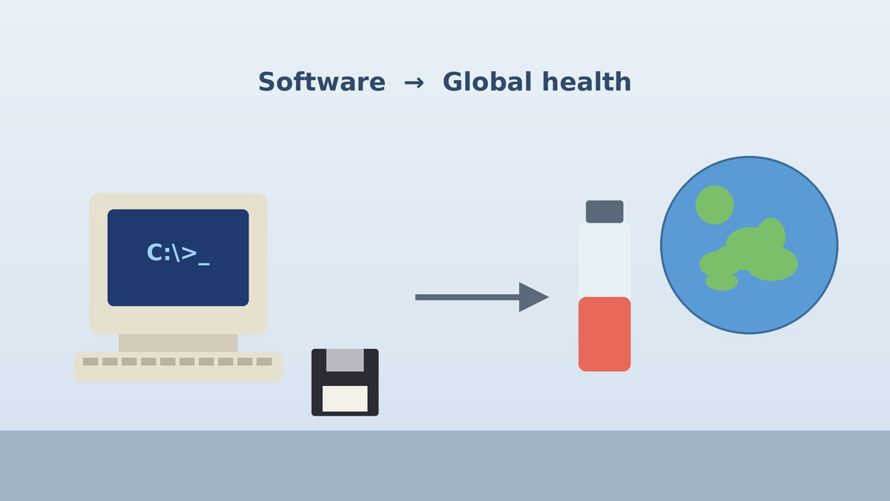
Bill Gates, From Harvard Dropout to the World’s Biggest Philanthropist
My first serious work with computers, like that of millions of programmers in India, happened on Microsoft software. DOS commands, early Windows, Office, Visual Studio. For a generation of Indian IT professionals, Bill Gates’s company was the foundation of our careers. Later, I learned about his foundation’s work against polio in India and saw a completely different side of the same man.
A Curious Boy in Seattle
William Henry Gates III was born on 28 October 1955 in Seattle. His father was a lawyer and his mother a businesswoman active in community work. At Lakeside School, he got access to a computer terminal in 1968, rare for students anywhere. He and his friend Paul Allen spent countless hours programming.
Leaving Harvard
Gates went to Harvard but spent more time thinking about computers than studies. In 1975, after seeing a new microcomputer on a magazine cover, he and Allen wrote software for it. That year, they founded Microsoft. Gates dropped out to focus on it full time.
The Deal That Changed Everything
In 1980, IBM was building its first personal computer and needed an operating system. Microsoft supplied MS-DOS, crucially keeping the right to license it to other computer makers. As IBM-compatible PCs spread, Microsoft’s software went everywhere.
Microsoft then launched Windows and Microsoft Office. By the 1990s, Windows ran on the vast majority of personal computers worldwide, and Gates became the richest person in the world.
Antitrust and Criticism
Microsoft’s dominance brought legal trouble. In the late 1990s, the US government sued Microsoft for abusing its monopoly, especially by bundling Internet Explorer with Windows. A court initially ordered the company to be split, though this was overturned on appeal and the case was settled. Many people at the time saw Gates as an aggressive, even ruthless competitor.
The Second Career
In 2000, Gates stepped down as Microsoft’s CEO, and he and his then-wife Melinda founded the Bill & Melinda Gates Foundation, later renamed the Gates Foundation. It became one of the largest private charities in history, focusing on:
- Global health: vaccines, polio eradication, malaria, tuberculosis and HIV.
- Sanitation and nutrition in poor countries.
- Agriculture for small farmers.
- Education in the United States.
Gates and India
India was one of the foundation’s biggest areas of work. It supported polio vaccination campaigns alongside the Indian government, WHO, UNICEF and Rotary. In 2014, India was certified polio-free, a huge public health achievement, mostly due to millions of Indian health workers and volunteers, with the foundation as an important partner. It also supports programmes in Bihar and Uttar Pradesh on maternal and child health, sanitation and agriculture.
Giving It All Away
In 2010, Gates and Warren Buffett launched the Giving Pledge, encouraging billionaires to give most of their wealth to charity. In 2025, Gates announced that his foundation would spend most of his fortune over the next two decades and then close by 2045.
The Criticisms
Gates is not without critics. Some argue that a single billionaire’s foundation has too much influence over global health priorities. Others question his past business practices, his role in promoting certain technologies, and some of his personal associations. During the COVID pandemic, he also became the target of wild conspiracy theories, which I think were unfair and harmful.
What His Life Teaches Me
- Seize the right moment. Gates saw the PC revolution early.
- Smart deals matter as much as good products.
- Success brings responsibility. Wealth can be used to solve big problems.
- People can change. The aggressive competitor of the 1990s became a full-time philanthropist.
The Other View
Some critics say philanthropy by billionaires is no substitute for fair taxes and public systems, and that foundations can bypass democratic accountability. Others believe Gates’s early business tactics harmed competition and innovation. These are serious arguments. But having seen India’s polio campaign succeed, I believe his foundation’s work has saved many lives, and that is a legacy worth respecting, even while debating the system that produced such wealth.

I am an IT Support Engineer at du, Dubai, with 1 year of experience in IT infrastructure and support. I graduated from the National Institute of Technology Calicut with a bachelor's degree in Information Technology. I am originally from Kozhikode, Kerala, India and moved to Dubai in 2025. Outside work I enjoy photography and reading.