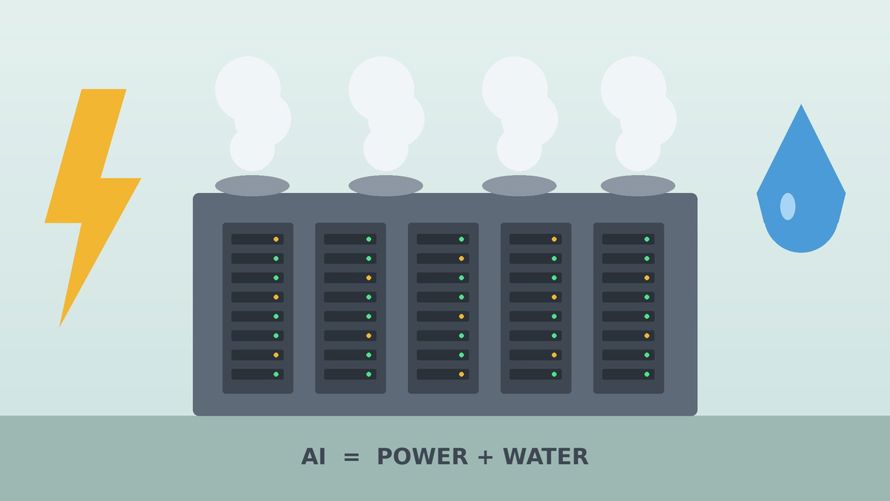
The Hidden Water and Power Cost of the AI Boom
When I ask an AI tool to summarise a long document, the answer appears in a few seconds. It feels like magic, clean and invisible. But somewhere, inside a large building full of servers, thousands of chips are working hard, heating up and drawing power. Fans spin, pumps move water and cooling systems run day and night.
I think most of us, myself included, have not fully understood that the AI revolution is also a revolution in electricity and water use.
How Much Power Are We Talking About?
The International Energy Agency estimates that data centres used around 1.5 percent of the world’s electricity in 2024, and that their demand could roughly double by 2030, driven largely by AI. Some individual AI data centres now use as much power as a medium-sized city.
In the United States, power companies have reported huge new demand from data centres. Tech companies are signing deals for nuclear power, building gas plants and buying vast amounts of solar and wind. Some old coal plants have had their closures delayed.
And the Water?
Chips get very hot. Many data centres keep them cool using evaporative cooling, which consumes large amounts of fresh water. Electricity generation itself also uses water, especially in thermal power plants.
Big technology companies have reported sharp rises in their water use in recent years, largely linked to AI. In dry regions of the US, Spain, Chile and elsewhere, local residents have protested new data centres because of water worries.
Why India Should Pay Attention
India is quickly becoming a major data centre hub. Companies are investing billions in facilities in Mumbai, Chennai, Hyderabad, Noida and Visakhapatnam. That brings jobs, investment and digital independence, and I welcome it.
But many of these cities already face water stress. Chennai went through a severe water crisis in 2019. Bengaluru faced shortages in 2024. Groundwater in many areas is falling. Our electricity grid still relies heavily on coal. Adding huge, always-on data centres without careful planning could strain both water and power, and push up emissions.
Are There Solutions?
Yes, and that is the good news.
- Better cooling: Liquid cooling, closed-loop systems and air cooling in suitable climates can sharply cut water use.
- Recycled water: Data centres can use treated wastewater instead of drinking water.
- Clean power: Pairing data centres with solar, wind, hydro or nuclear, plus battery storage.
- Smarter location: Building in places with cooler climates, plentiful renewable power and less water stress.
- More efficient AI: Smaller models, better chips and smarter software can deliver the same result with far less energy.
What I Would Like to See
- Mandatory disclosure of energy and water use by large data centres, so citizens know the real impact.
- Water rules that prevent data centres from competing with homes and farms for scarce groundwater.
- Incentives for green data centres in India, linked to renewable energy commitments.
- Awareness among users. We don’t need to feel guilty for every query, but we should understand that AI is not free for the planet.
The Other View
Supporters of the AI boom argue that AI will also help fight climate change, by improving power grids, designing better batteries, predicting weather and cutting waste across industries, and that data centres still use far less energy than sectors like steel or transport. Others note that efficiency improvements often outpace fears. These points are valid, and I am optimistic about AI’s benefits. But I believe a technology this powerful should be honest about its footprint. If we plan well now, India can build an AI future that doesn’t leave its cities thirsty.

Hi friends, I'm Dhananjay Prajapati from Pratapgarh, Uttar Pradesh. I have good knowledge about Sales and Field Marketing in Software Services. I have 1+ years of experience.