Should Children Be Allowed to Use AI Chatbots?
As a parent and as someone who works in technology, I am pulled in two directions on this question.
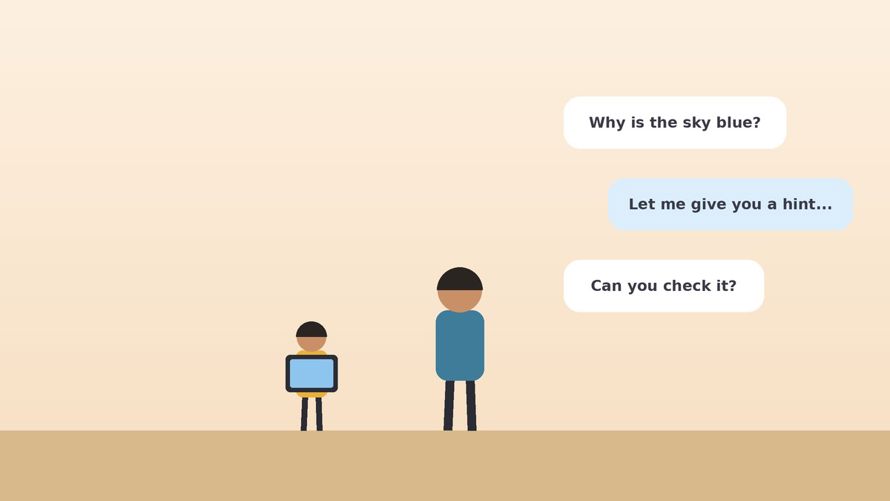
On one side, I see how AI can be a wonderful tutor. A child can ask why the sky is blue, how volcanoes work or how to solve a tricky fraction, and get a patient, clear answer at any time of day. For children whose parents cannot afford tuition, that is a big deal.
On the other side, I see risks that most parents haven’t thought about yet. So my answer is: yes, children can use AI chatbots, but not alone, not unlimited and not as a friend.
Where AI Helps Children
- Curiosity: Children ask hundreds of questions. AI can answer many of them with explanations, examples and follow-up.
- Learning support: Step-by-step help with maths, science and grammar, especially in regional languages.
- Creativity: Children can co-write stories, plan projects or brainstorm science fair ideas.
- Confidence: Shy children sometimes find it easier to ask a question they fear sounds silly.
Where It Worries Me
- Wrong answers: AI can be confidently incorrect. Children often cannot tell the difference.
- Shortcut thinking: If a chatbot does the homework, the child learns nothing. Writing an essay is how you learn to think.
- Emotional attachment: Some apps are designed as “companions” that remember everything, flatter and respond warmly at any hour. For a lonely child or teenager, that can become a substitute for real friendships.
- Inappropriate content: Filters are improving but not perfect.
- Privacy: Children share personal details, feelings and family information without thinking about where that data goes.
The Law Is Starting to Catch Up
Around the world, governments are reacting. In late 2026, New York passed a law that stops AI chatbots from acting as companions to minors, requires age checks and bars chatbots from pretending to children that they are human or have feelings. Other US states and federal lawmakers are considering similar rules. Australia has already restricted social media for under-16s. Some AI companies have tightened their own rules for teenage users and added parental controls.
In India, the Digital Personal Data Protection Rules require verifiable parental consent before platforms process children’s personal data. That is a useful starting point, but we still need clear guidelines for AI products used by children and in schools.
My Rules as a Parent
- Use AI together with younger children, like reading a book together.
- Ask the AI to explain, not to answer. For homework, I encourage prompts like “give me a hint” rather than “solve this.”
- Check facts together using a textbook or a trusted website. It teaches children that every source can be wrong.
- No companion bots. A chatbot is a tool, not a friend or a confidant.
- Set time limits, just as with games and videos.
- Talk openly. I want my child to tell me if a chatbot says something strange or upsetting.
What Schools Should Do
Banning AI in schools is unrealistic. Students will use it at home anyway. I would rather schools teach AI literacy: how these tools work, why they make mistakes, how to use them honestly and when not to use them at all. Teachers can design assignments that require thinking, discussion and handwritten work, so AI supports learning instead of replacing it.
The Other View
Some parents and experts believe children under a certain age should not use AI chatbots at all, just as many argue against smartphones for young children, because their brains and social skills are still developing. Others say AI is simply the next learning tool, like calculators or the internet, and that fear will only leave our children behind. I understand both. My own position is in the middle: let children explore AI, but with an adult nearby and a clear understanding that a machine is not a friend.

I am best.