Why Healthcare in America Costs So Much
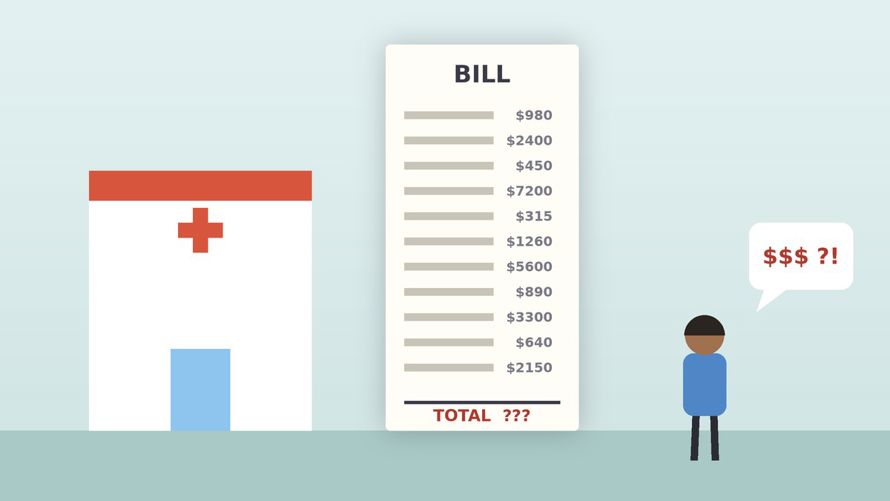
An Indian friend who moved to the US for work once sent me a photo of a hospital bill. His son had fallen at a playground, needed a few stitches and an X-ray, and spent about four hours in an emergency room. The bill, before insurance, was more than many Indian families earn in a year.
He had good insurance through his employer, so in the end he paid a fraction of it. But he told me something I have never forgotten: “The scary part is not the amount. It is that nobody could tell me the price before they treated him.”
That one line captures American healthcare better than any report.
The Numbers in Simple Words
The United States spends well over four trillion dollars a year on healthcare, roughly 17 to 18 percent of its entire economy. Most other rich countries spend between 10 and 12 percent. Per person, America spends about twice the average of its peers.
And yet American life expectancy is lower than in most of those countries. Millions of people remain uninsured, and many more have insurance with deductibles so high that they avoid going to a doctor.
So where does all that money go?
1. Prices, Not Visits
Americans do not see doctors more often than people in other rich countries. In many cases they see them less. What is different is the price of everything: a scan, a day in hospital, a surgery, a specialist’s fee, a bottle of insulin. The same MRI can cost several times more in the US than in Europe or Japan.
Why? Because in most countries the government or a national system negotiates prices. In America, thousands of insurers negotiate separately with thousands of hospitals, and the hospitals with the most market power can demand the most.
2. Paperwork as an Industry
The US has a huge number of insurance plans, each with its own rules, forms, networks and approvals. Hospitals hire armies of billing staff to deal with insurers, and insurers hire armies of staff to push back. A meaningful share of American health spending goes to administration, not care.
3. Drug Prices
Brand-name medicines often cost far more in the US than elsewhere. Drug companies argue that high American prices fund research for the whole world. There is some truth to that, but it means Americans pay the bill for everyone. Recent reforms have started to bite, such as Medicare negotiating prices for some costly drugs and a monthly cap on insulin costs for older Americans, but the gap remains large.
4. Insurance Tied to Jobs
Most working Americans get insurance from their employer. Lose your job, and you can lose your coverage. This system grew by accident during the Second World War, when companies offered health benefits instead of higher wages. It stuck, and today it makes people afraid to change jobs or start businesses.
5. Defensive Medicine and Lawsuits
Doctors worry about being sued, so some order extra tests to protect themselves. The effect is debated, but most experts agree it adds some cost.
What America Does Well
To be fair, the US has some of the best hospitals, medical research and cancer treatment in the world. New drugs and devices often appear there first. If you have excellent insurance and a serious illness, American care can be outstanding.
What It Could Learn
- Transparent prices, shown before treatment, as most other services do.
- Stronger price negotiation, at least for drugs and common procedures.
- Simpler insurance, with standard forms and rules.
- Even India’s Ayushman Bharat approach of fixed package rates for procedures, imperfect as it is, shows how setting prices can expand access.
The Other View
Many Americans fear that a government-run system would mean long waiting lists, fewer choices and higher taxes, as they see in parts of Canada and Britain. Others say competition and private innovation are what made American medicine so advanced in the first place. Those concerns are reasonable, and no country has a perfect system. But when a family’s biggest fear after an accident is the bill and not the injury, I think something has gone badly wrong.

I am a Senior Consultant, Cardiology at Labaid Specialized Hospital, Dhaka. I graduated from Rangpur Medical College with an MBBS and obtained an FCPS in Cardiology from the Bangladesh College of Physicians and Surgeons. I am originally from Rangpur, Rangpur Division. After my training at Sir Salimullah Medical College Mitford Hospital I have worked for 10 years in this role. My areas of interest are coronary artery disease, heart failure and echocardiography.