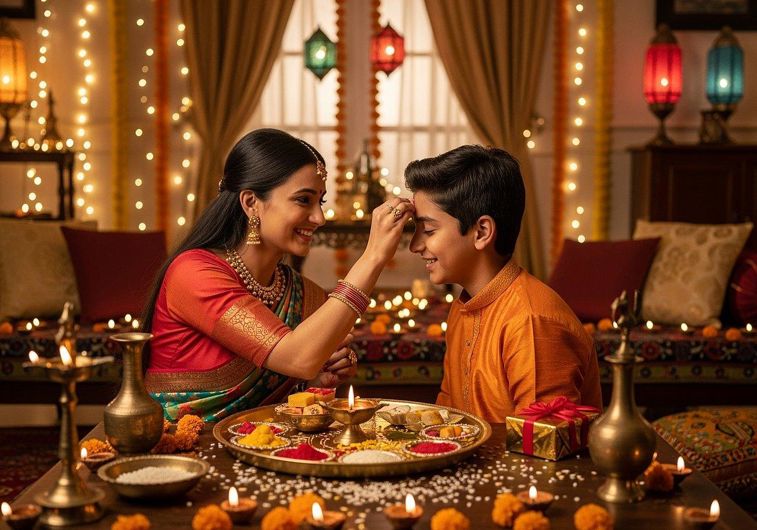
Bhai Dooj: Why Brothers and Sisters Celebrate This Special Bond
What Is Bhai Dooj?
Bhai Dooj is a festival that celebrates the bond between brothers and sisters. It is observed during the Diwali period, with the date determined by the traditional lunar calendar. The festival is known by different names in various regions, including Bhai Tika and Bhai Phonta.
The Meaning Behind the Celebration
The day is associated with affection, prayers, and good wishes between siblings. In many families, a sister applies a tilak to her brother's forehead and prays for his well-being. The brother may offer a gift or express his affection in return. Customs differ from one community to another.
Common Bhai Dooj Rituals
- Prepare the puja space: Families arrange a clean place and the items used in their customary prayer.
- Apply tilak: A sister may apply a traditional mark on her brother's forehead.
- Offer prayers: Siblings exchange blessings and good wishes.
- Share a meal: Families often enjoy sweets or a special meal together.
- Exchange gifts: Gifts may be shared as a gesture of affection, though they are not the purpose of the festival.
Regional Ways of Celebrating
The details of Bhai Dooj vary across India. The names, foods, prayers, and exact customs may be different, but the central theme remains the celebration of sibling affection and mutual care.
Celebrate Even from a Distance
Siblings who live in different cities or countries can still mark the day with a phone call, video chat, thoughtful message, or a gift sent with love. The relationship matters more than the form of celebration.
Conclusion
Bhai Dooj is a reminder to value family relationships and make time for one another. Its simple rituals give siblings an opportunity to express gratitude, affection, and hopes for each other's happiness.
The Story and Cultural Meaning of Bhai Dooj
Bhai Dooj is associated in popular tradition with the bond between Yama and Yamuna. Stories connected with the festival are told in different ways, but the central theme is affection, blessings, and the well-being of siblings. The festival gives brothers and sisters a special moment to recognize a relationship that continues through changing stages of life.
What Does the Tilak Symbolize?
In many households, a sister applies a tilak to her brother's forehead as part of a prayer for his well-being. The materials and method differ by region and family tradition. The ritual is a visible expression of affection and good wishes rather than a competition over how elaborate the ceremony should be.
Gifts Are Optional; Thoughtfulness Matters
Some siblings exchange clothes, sweets, books, or personal gifts, while others simply share a meal or spend time together. A handwritten note, a sincere conversation, or help with an everyday task can be just as meaningful. The celebration should reflect the relationship and each family's circumstances.
Include Every Kind of Family
Families may celebrate relationships with cousins, chosen siblings, or close relatives in ways that are meaningful to them. If siblings are far apart, a video call or a message can preserve the connection. The heart of the day is mutual respect, care, and the wish for one another's happiness.

I am a Project Engineer at Stantec, Calgary, with 6 years of experience in construction project management. I graduated from the University of Calgary with a BASc in Civil Engineering. Outside work I enjoy playing hockey and canoeing.