SpaceX Changed the Space Race and Who Can Catch Up
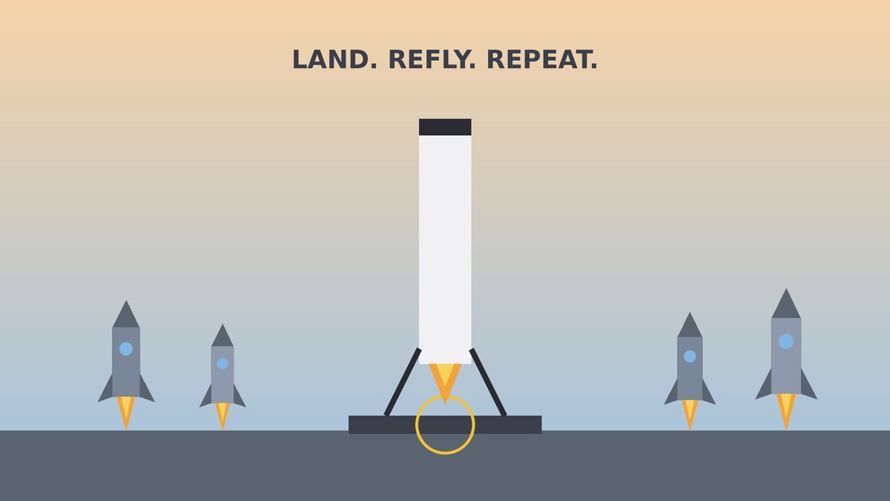
I remember watching a video in December 2015 of a Falcon 9 booster landing upright back on Earth after launching satellites. It looked unreal, like a film played backwards. Experts had said this was too difficult and too expensive to be practical.
Today, SpaceX lands boosters routinely and reuses them many times. It launches more rockets in a year than the rest of the world put together. That single shift, reusability, has changed the space race more than anything since the Moon landings.
What SpaceX Did Differently
1. Reusable rockets. For decades, rockets were thrown away after one use, like flying a new aeroplane for every flight. SpaceX made the first stage of Falcon 9 reusable, which dramatically cut launch costs.
2. Speed and risk-taking. SpaceX tests aggressively, accepts explosions as part of learning, and fixes problems quickly. Traditional agencies, answerable to governments and public opinion, are far more cautious.
3. Vertical integration. SpaceX builds most of its parts itself, from engines to software, controlling costs and timelines.
4. Starlink. By building its own constellation of thousands of internet satellites, SpaceX created both a massive customer for its own rockets and a huge source of revenue. Starlink now serves millions of users in many countries, and it has received approval to operate in India.
5. Starship. Its giant next-generation rocket, designed to be fully reusable, is still in testing. If it works as planned, with refuelling in orbit, it could cut costs again and carry huge loads to the Moon and Mars. NASA is relying on it to land astronauts on the Moon.
Why Others Fell Behind
Many space agencies and old aerospace companies were comfortable with expensive, government-funded rockets. There was little pressure to cut costs. By the time they realised the threat, SpaceX had a lead of years and a huge amount of flight experience.
Who Can Catch Up?
China: China is the strongest challenger. It launches dozens of rockets a year, runs its own space station, has landed on the far side of the Moon and brought back samples. Chinese companies are testing reusable rockets and building their own satellite internet constellations. With state backing and fast engineering, I believe China is most likely to close the gap.
Blue Origin: Jeff Bezos’s company has deep pockets and its heavy New Glenn rocket has now flown and landed a booster. It has moved more slowly than SpaceX, but it is a serious long-term player.
Europe: Europe’s Ariane 6 is not reusable, and the continent has fallen behind in launch costs. It is now funding new reusable projects, but it is starting late.
India: ISRO is working on reusable launch vehicle technology and a new heavy rocket, and private companies like Skyroot and Agnikul are building small launchers. India’s advantage is low cost and strong engineering. Its challenge is scale: SpaceX launches more in a few weeks than India does in a year.
Why This Matters to Ordinary People
Cheaper launches mean more satellites for internet access, weather forecasting, navigation, farming, disaster warnings and defence. Satellite internet could reach remote villages in the Himalayas or the Northeast where fibre is too costly. But it also concentrates enormous power in one private company, especially as governments and militaries depend on Starlink.
The Other View
Some argue that SpaceX’s success depended heavily on NASA contracts and taxpayer money, and that relying on one company owned by one controversial billionaire is risky. Others worry about thousands of satellites crowding orbit and affecting astronomy. Those concerns are real and deserve attention. But there is no doubt in my mind that SpaceX changed the game. The question now is not whether others will follow, but how fast, and whether countries like India can find their own place in this new space economy.

Hi, I am Ayesha, currently studying MS Computer Science at the National University of Computer and Emerging Sciences, Lahore after completing my BS Computer Science from Balochistan University of Information Technology, Engineering and Management Sciences. My interests are machine learning, natural language processing and research. In my free time I enjoy playing chess and cooking.