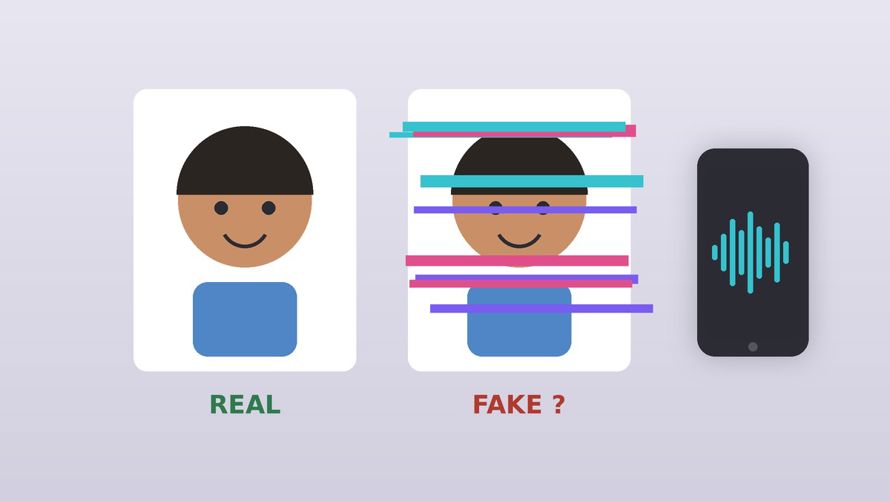
Deepfakes Are Getting Better and Our Laws Are Not Keeping Up
Not long ago, a friend’s elderly father received a call. The voice on the other end sounded exactly like his grandson, crying, saying he had been in an accident and needed money urgently. Luckily, the family had a habit of calling back on a known number before sending money. The grandson was at college, perfectly fine. The voice had been cloned.
Stories like this are no longer rare. Deepfake videos, images and audio are getting cheaper, faster and more convincing every month. I believe our laws, our institutions and our habits are struggling to keep pace.
What Deepfakes Are Being Used For
- Fraud: Cloned voices of relatives or bosses asking for urgent money transfers. Fake videos of celebrities promoting investment scams.
- Politics: Fake speeches or edited clips of leaders, especially during elections.
- Harassment: Morphed images and videos targeting women, often without consent, causing deep harm.
- Business: Fake executives on video calls authorising payments.
- Misinformation: Fabricated videos of disasters, riots or attacks that spread before anyone can check.
What India Has Done
I want to give credit where it is due. In February 2026, the government notified amendments to the IT Rules that specifically address synthetically generated content. Platforms that help create or share AI-generated content must now label it clearly and embed markers that cannot be removed. Large social media platforms must ask users to declare AI-generated content and use tools to check those declarations. And for certain lawful orders, platforms must remove content within three hours, down from the earlier 36 hours.
Existing laws on impersonation, fraud, defamation and obscenity also apply to deepfakes, and the new criminal codes cover many of these offences.
Where the Gaps Remain
- Enforcement: Rules are only as strong as their policing. Cyber cells in many districts are understaffed and undertrained.
- Speed of spread: A deepfake can reach millions on WhatsApp before any takedown order is issued, and private messaging is hard to monitor.
- Open-source tools: Anyone can download software to create deepfakes on a personal computer, with no labels at all.
- Cross-border creators: Many fake videos are made outside India, beyond the reach of Indian police.
- Victim support: Women targeted by fake intimate images often struggle to get quick help or justice.
- Detection: Even experts sometimes struggle to tell real from fake. Ordinary users have little chance.
What I Would Like to See
- Fast-track cyber courts for deepfake harassment and fraud cases.
- Better training and tools for police at the district level.
- Mandatory watermarking built into AI tools sold or offered in India.
- Public awareness campaigns in every language, like those we saw for UPI fraud.
- International cooperation with other countries and platforms to trace creators.
How to Protect Yourself and Your Family
- Agree on a family code word or always call back on a known number before sending money.
- Be suspicious of urgency. Scammers rely on panic.
- Don’t trust videos of celebrities promoting investments or giveaways.
- Limit public posting of clear voice recordings and high-quality face videos, especially of children.
- Report fraud quickly on the national cybercrime helpline 1930 or at cybercrime.gov.in.
The Other View
Some worry that strict deepfake rules could be misused to censor satire, criticism and legitimate creative work, and that labelling every AI-assisted edit will burden creators and small businesses. Others argue technology companies, not users, should carry most of the responsibility. These concerns are serious. Good rules must protect free expression while stopping real harm. But when a cloned voice can empty a retired person’s bank account in minutes, I believe doing too little is a far bigger risk than doing too much.

I am a Software Engineer at Telenor Pakistan, Islamabad, with 2 years of experience in .NET and React based enterprise applications. I completed my BS Computer Science from the National University of Sciences and Technology. Outside work I enjoy playing squash and cooking.