
SerpSpur Keyword Research Tool: Discover Better SEO Opportunities
Keyword research is more than finding high-volume search terms. Effective SEO requires understanding search intent, competitor strategies, keyword difficulty, seasonal trends, and the changing search results landscape.
With AI Overviews, discussion forums, videos, featured snippets, and other SERP features influencing search visibility, marketers need more than a basic keyword list.
1. Analyze Competitor Keywords
Understanding which keywords competitors target can reveal opportunities for your own website.
SerpSpur supports competitor keyword analysis by helping users examine the top 10 organic search results for a target query.
Use this information to:
Identify relevant competitor keywords.
Discover missing topics and content gaps.
Compare competing pages and their coverage.
Find ideas for supporting articles.
Plan content around genuine search demand.
Example: If competing pages about technical SEO audits overlook JavaScript rendering or crawlability, you could create a more comprehensive resource that addresses these topics.
The goal is not to copy competitors, but to provide more useful, relevant content.
2. Evaluate Keyword Difficulty
High search volume does not automatically mean a keyword is worth targeting. Competitive searches may require stronger content, greater topical authority, and more backlinks.
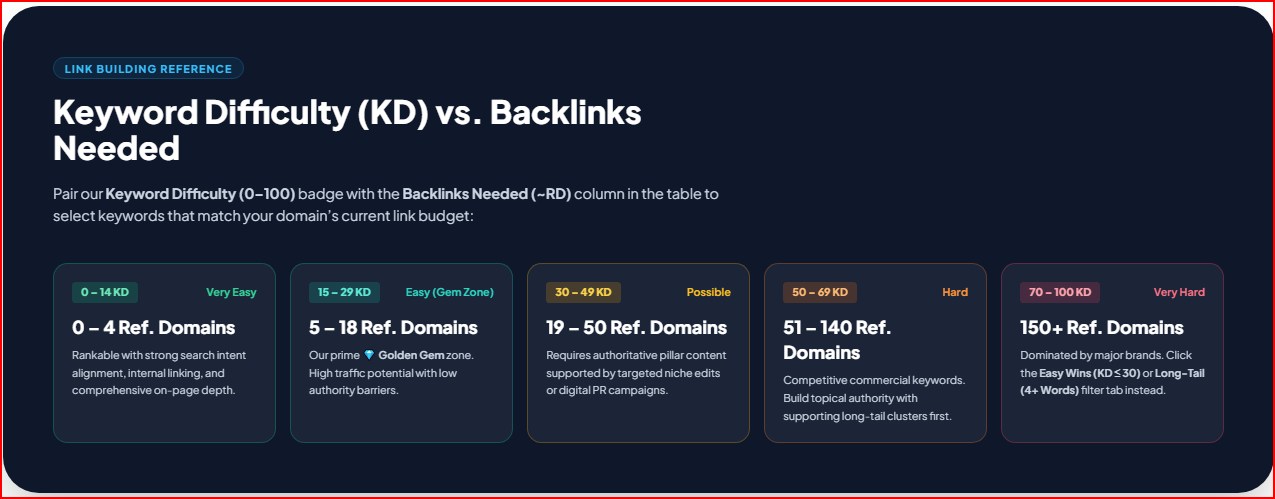
SerpSpur's keyword difficulty checker helps you assess potential competition before investing in content creation.
Consider these factors when choosing keywords:
Keyword difficulty and search demand.
Competitors' content quality and backlink profiles.
Search intent and audience relevance.
Your website's authority and topical coverage.
Practical tip: Smaller websites may benefit from targeting specific long-tail keywords before competing for broad, highly competitive terms.
A lower difficulty score indicates a potential opportunity, not a guaranteed ranking.
3. Discover Long-Tail Keywords
Long-tail keywords are specific search phrases that often reveal a clearer user need.
For example, instead of targeting “SEO tools,” you might investigate “technical SEO audit tool for Shopify stores.”
Specific queries can help you create more relevant content for users seeking particular solutions.
With SerpSpur, you can explore related keyword suggestions and use them to:
Find narrower search opportunities.
Understand specific customer questions.
Build supporting content around core topics.
Identify keywords relevant to particular products or services.
The best long-tail keywords combine relevance, achievable competition, and meaningful value to your audience.
4. Research Keywords by Country
Search demand and competition can vary across geographic markets.
The SerpSpur Keyword Research Tool allows users to select a target country when researching keywords, supporting international SEO and market-specific content planning.
This is useful for:
Businesses targeting the USA, UK, or Canada.
E-commerce stores serving multiple countries.
Agencies managing international SEO campaigns.
Local businesses researching relevant search terms.
Research each market independently rather than assuming the same keyword strategy will work everywhere.
5. Understand Search Trends and Seasonality
Search volume provides an estimate of keyword demand, but a single figure does not tell the whole story.
Some keywords experience seasonal peaks, while others grow or decline over time.
Where historical trend data is available, examine:
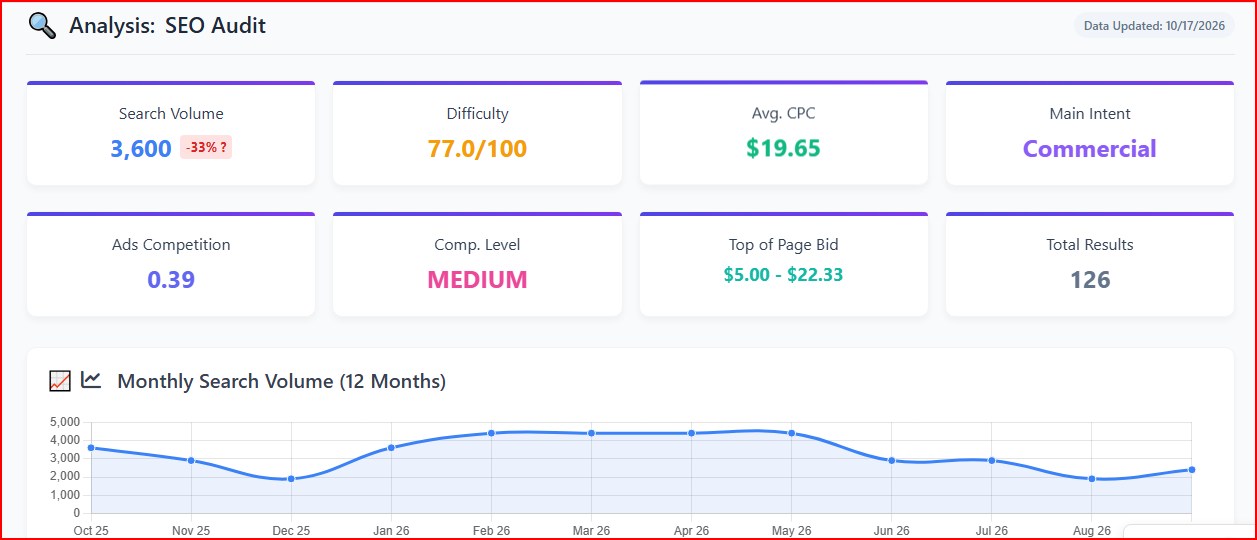
Monthly search volume: Estimated demand for a keyword.
Year-over-year changes: How interest compares with the previous year.
Short-term momentum: Potential changes in recent demand.
Seasonality: Periods when a topic attracts greater interest.
For example, an online retailer can use seasonal keyword research to plan product guides and category content before demand increases.
Historical trends support planning, but they cannot guarantee future search performance.
6. Evaluate Commercial Intent With CPC Data
Cost per click (CPC) provides insight into paid advertising activity surrounding a keyword.
SerpSpur provides keyword research features that help users investigate CPC and other available competitive metrics.
These figures can help marketers assess potential commercial relevance, but high CPC does not guarantee high organic conversions.
Consider four common search intents:
| Intent | User's goal | Suitable content |
|---|---|---|
| Informational | Learn or solve a problem | Guides and tutorials |
| Navigational | Find a specific destination | Brand or destination pages |
| Commercial | Compare available options | Reviews and comparisons |
| Transactional | Complete an action or purchase | Product and service pages |
Matching keywords with the right page type helps create a more relevant search experience.
7. Research Keywords in the AI Search Era
Modern search results can include AI Overviews, featured snippets, videos, local listings, shopping results, and discussion forums.
These features influence how users discover information and interact with organic listings.
Before targeting a keyword, investigate:
Which SERP features appear.
Whether AI-generated summaries are present.
Whether Reddit, Quora, or specialist forums rank.
What types of content currently satisfy the query.
Whether the results indicate informational or commercial intent.
Forum results may reveal demand for practical advice or firsthand experiences, but their presence does not automatically mean a keyword is easy to rank for.
SerpSpur's keyword research workflow helps users investigate competitive search environments and make more informed content decisions.
8. Build a Practical Keyword Research Workflow
Follow these steps to turn keyword data into an actionable plan.
Enter a seed keyword: Start with a product, service, or subject relevant to your audience.
Choose a target country: Focus on the market you want to reach.
Review keyword metrics: Examine available search volume, difficulty, and related information.
Analyze competitors: Investigate the top-ranking pages and their content.
Expand your research: Discover related and long-tail keyword suggestions.
Match search intent: Decide whether each keyword suits a guide, comparison, product page, or another format.
Prioritize opportunities: Consider relevance, competition, business value, and content quality.
Export and organize: Use CSV exports where available to build keyword lists and editorial plans.
This process helps SEO professionals prioritize meaningful opportunities rather than collecting keywords without a clear purpose.
9. Use Flexible Credits for Keyword Research
Traditional monthly subscriptions can suit teams with consistent research needs. However, freelancers and smaller businesses may prefer a more flexible approach.
SerpSpur offers a credit-based model with purchased credits that do not expire.
Key benefits include:
Use purchased credits at your own pace.
Research when your projects require it.
Access keyword data without deliberately blurred difficulty or CPC values, according to the platform's stated offering.
Manage research usage around your workload.
The cost per search depends on the credit package and the credits consumed by each operation. Review current pricing and usage terms before choosing a plan.
10. Who Should Use SerpSpur?
The SerpSpur Keyword Research Tool can support several types of users.
SEO freelancers: Research keywords and identify opportunities for client projects.
SEO agencies: Organize competitor research across multiple campaigns.
Website owners: Understand search demand relevant to their businesses.
E-commerce stores: Research product keywords and commercial search intent.
Content marketers: Discover related topics and develop editorial plans.
Digital marketing consultants: Use keyword insights to inform strategic recommendations.
The right tool depends on your research requirements, budget, and preferred workflow. Evaluate its available features against your existing tools before committing to a paid plan.
Conclusion: Make Keyword Research More Strategic
Effective keyword research combines search demand, competitor analysis, keyword difficulty, search intent, and business relevance.
The SerpSpur Keyword Research Tool brings these activities into one workflow, helping users discover keyword opportunities, explore long-tail searches, investigate competitors, and plan content around their target markets.
Whether you are an SEO freelancer, agency, website owner, or e-commerce business, a structured research process can help you make better-informed content decisions.

Hi, I am Mujahid Mughal SEO Specialist. Helping businesses improve their online visibility with professional SEO, Shopify, and Digital Marketing solutions. specialize in helping startups, eCommerce brands, SEO Audit, Store Management and local businesses .