A Missing Content Credential Does Not Make a Photo Fake
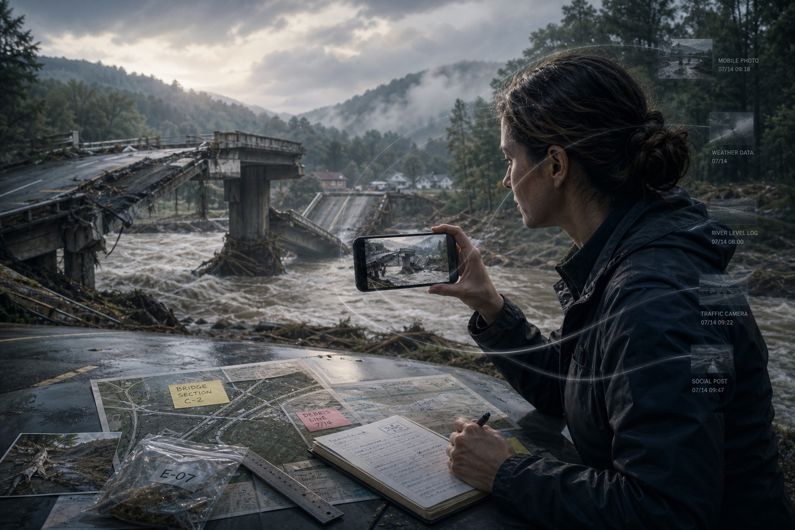
A photograph appears in a group chat during a flood. It shows a damaged bridge, but there is no photographer’s name, no original link and no Content Credential. Should a platform label it suspicious?
It should encourage verification. It should not suggest that missing credentials are evidence of fabrication. As services introduce ways to trace how images were made, that distinction deserves more attention than the badges themselves.
A record of origin is not a verdict on reality
The Coalition for Content Provenance and Authenticity (C2PA) specifications describe a technical framework for attaching cryptographically verifiable provenance information to digital content. Depending on the tools involved, that information can include details about creation, editing and the software or organisation signing the record. Content Credentials make this kind of information accessible to viewers.
That is useful. A newsroom could inspect an image’s recorded editing history, while a reader could see a disclosed use of generative AI. Cryptographic checks can help establish whether a signed record remains valid and whether its association with the content checks out.
But image provenance verification is not the same as factual verification. An authentic camera photograph can depict a staged scene. An unchanged image can be paired with a false location. A signed record cannot, by itself, establish that a caption accurately describes what happened.
The opposite mistake is just as serious: treating an image without a record as fake. Many cameras and editing workflows do not produce these credentials. Metadata can disappear during ordinary processing, and taking a screenshot can break the connection to an embedded record. Some systems support recovery through additional mechanisms, but viewers should not assume that every platform implements them.
The interface needs to admit what it does not know
A single green tick is tempting because it is easy to understand. Unfortunately, people may understand it as “this is true,” even when the system has established something narrower.
A more responsible interface would distinguish between:
- A validated credential: explain who signed it and what the record actually says.
- No credential found: state that provenance information is unavailable, without implying deception.
- A credential that could not be validated: explain the failed check where possible, rather than jumping straight to “fake.”
These are different states, not three positions on a simple truth scale. Content authenticity labels should preserve those differences.
There is also a fairness problem. If platforms start treating credentials as a condition for credibility, a witness using an older phone could appear less trustworthy than a well-equipped publisher. Citizen journalism verification should consider the original source, corroborating footage, location clues and independent reporting—not simply whether someone owns compatible equipment.
Nor should an editing history become an automatic warning. Cropping a photograph, correcting exposure or concealing a vulnerable person’s face can be legitimate. Generative AI disclosure matters, but readers still need to know what was changed and why it matters to the claim being made.
The right role for digital content provenance is to add evidence, not replace judgement. Platforms should invest in clear explanations and media verification workflows alongside the signing technology. A badge can help answer “what do we know about this file?” It should never silently become an answer to “did this really happen?”

Working as Software Developer with Netcompany in Odense. I have 2 years of experience in backend development and cloud platforms. I graduated from the University of Southern Denmark with a BSc in Computer Science and completed an MSc in Computer Science at the same university. In my free time I like baking and winter swimming.